

.jpg.rend.hgtvcom.126.196.suffix/1789013089131.jpeg)











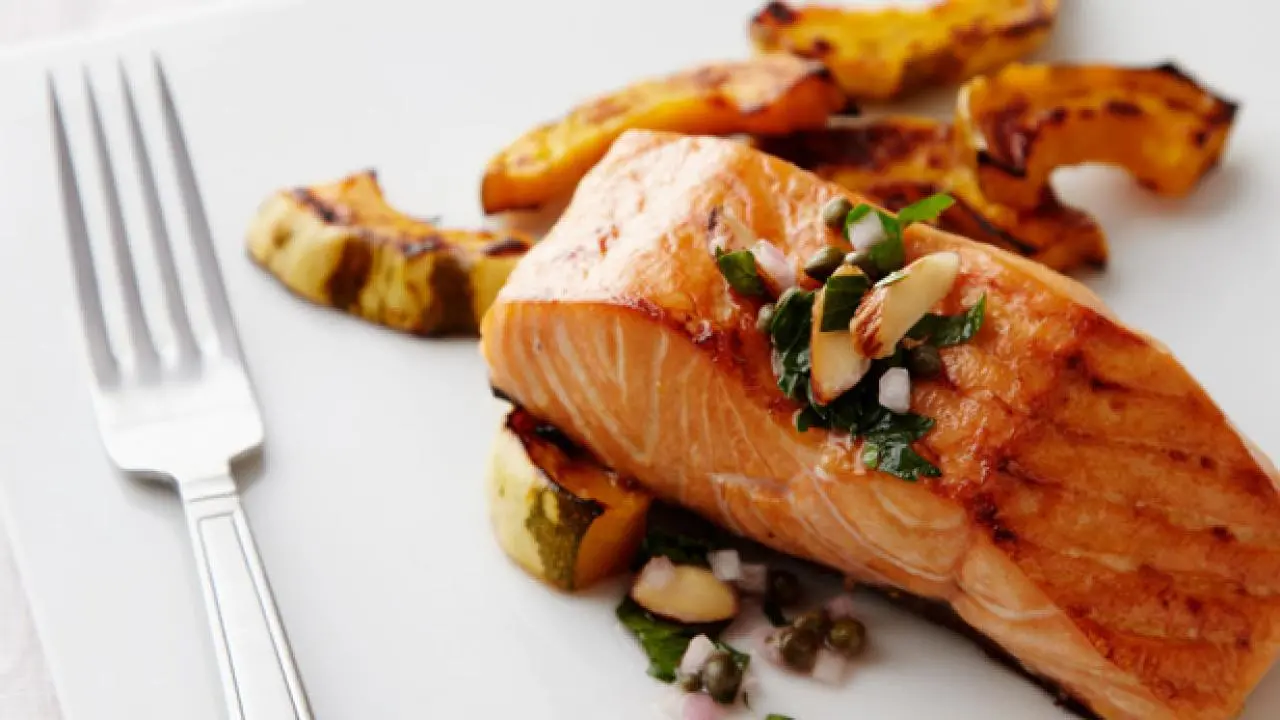
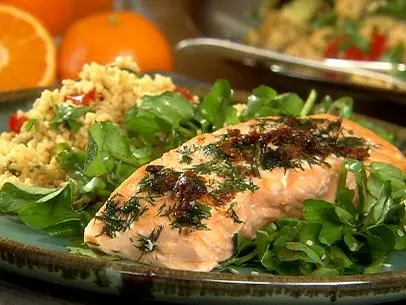
Oven-Baked Salmon With Toasted Almond Parsley Salsa
Look no further for the perfect baked salmon recipe that yields tender, buttery fillets every time.
- Nutritional Analysis
- Per Serving
- Calories
- 177
- Total Fat
- 11 grams
- Saturated Fat
- 2.5 grams
- Cholesterol
- 47 milligrams
- Sodium
- 170 milligrams
- Carbohydrates
- 0 grams
- Dietary Fiber
- 0 grams
- Sugar
- 0 grams
- Protein
- 17 grams
Article By: Krissy Downey
Healthy, easy, delicious and ready for dinner in 20 minutes: Chef Kathleen Daelemans’ oven-baked salmon recipe is hard to beat. Over 400 reviewers agree that it should be added to your weeknight dinner rotation, stat.
How To Bake Salmon in the Oven Like a Pro
Pat the salmon dry. This step is essential! Take a few layers of paper towel and thoroughly pat the salmon fillets dry before seasoning them. Moisture prevents browning, so absorbing any excess moisture off the salmon ensures that the tops will get nice and browned during the roasting process.
Place the salmon on the sheet tray, skin side down. While it is super easy to roast salmon, it’s important to also remember that fish fillets are delicate, and we don’t want them to fall apart. Salmon skin provides an easy barrier between the salmon and the sheet tray, preventing any sticking or breakage. Plus, placing the skin down ensures that it gets extra crispy from the heat of the baking sheet.
Temperature to cook salmon: The best way to bake salmon is at high heat. At 450 degrees F, salmon cooks quickly and retains all its juices, ensuring tender results. Plus, high heat transforms the salmon skin into a crisp, golden-brown crust.
Add some flavor. Cooking salmon fillets in the oven is beyond easy, but plain salmon can quickly become boring when you eat it on repeat. Jazz up dinner with a quick homemade salsa made from capers, red wine vinegar, shallots, parsley and almonds. In place of simple lemon juice, it is the perfect balance of tangy, fresh and crunchy.
How Long To Bake Salmon
Bake until the outside of the salmon is opaque and slightly firm to the touch. To test for doneness, press the edge of the salmon with a fork; the layers should separate easily, and you can look between them to check the color of the salmon. Deep pink indicates rare, while perfectly pale pink is a sign the salmon is well-done.
For a precise check, an instant-read thermometer inserted into the thickest part should read 145 degrees F for well-done salmon, per USDA guidance — pull it a few degrees earlier if you prefer the center cooked to medium doneness.
How Long To Bake Frozen Salmon
In a pinch, you can bake this recipe straight from frozen — but you'll need to follow a few additional steps. First, rinse the salmon fillets under cool water to remove any ice that has formed on the outside. Then, dry the fillets with paper towels. Bake for 8 minutes, then season — since seasoning won't stick to a frozen filet. Return the seasoned fillets to the oven and continue baking, until they are completely done.
Can I Make This Recipe With Other Kinds of Fish?
Absolutely! Follow these same rules with any whitefish like cod, halibut, sea bass or tilapia. You’ll know whitefish is cooked when it has a slightly opaque appearance. We love hearty fish fillets, but the fresh salsa will also pair well with shrimp and scallops.
What To Serve With Simple Baked Salmon
Chef Daelmans suggests roasted squash for this recipe, but there are so many other pairings that would work fabulously here. Keep things clean with cauliflower mashed potatoes, baked sweet potatoes or simple sautéed broccoli. We also love the idea of giving it some heartiness with a side of rice pilaf or whole grain pasta.
How To Store and Reheat Leftover Salmon
You can keep cooked salmon fillets in an airtight container in the fridge for 3-4 days. When you're ready to eat the leftover salmon, reheat it gently — wrapped in foil, in a 275-degree F oven until heated through, which will preserve the texture far better than the microwave (which can quickly dry fish out).
Oven-Baked Salmon
- Level: Easy
- Total: 20 min
- Prep: 5 min
- Cook: 15 min
- Yield: 4 servings
-
- Nutritional Analysis
- Per Serving
- Calories
- 177
- Total Fat
- 11 grams
- Saturated Fat
- 2.5 grams
- Cholesterol
- 47 milligrams
- Sodium
- 170 milligrams
- Carbohydrates
- 0 grams
- Dietary Fiber
- 0 grams
- Sugar
- 0 grams
- Protein
- 17 grams
- Level: Easy
- Total: 20 min
- Prep: 5 min
- Cook: 15 min
- Yield: 4 servings
-
- Nutritional Analysis
- Per Serving
- Calories
- 177
- Total Fat
- 11 grams
- Saturated Fat
- 2.5 grams
- Cholesterol
- 47 milligrams
- Sodium
- 170 milligrams
- Carbohydrates
- 0 grams
- Dietary Fiber
- 0 grams
- Sugar
- 0 grams
- Protein
- 17 grams
Ingredients
Toasted Almond Parsley Salsa:
Directions
- Preheat the oven to 450 degrees F.
- Season salmon with salt and pepper. Place salmon, skin side down, on a non-stick baking sheet or in a non-stick pan with an oven-proof handle. Bake until salmon is cooked through, about 12 to 15 minutes. Serve with the Toasted Almond Parsley Salsa and squash, if desired.
Toasted Almond Parsley Salsa:
- Mince the shallot and add to a small bowl. Pour the vinegar over the shallots and add a pinch of salt. Let sit for 30 minutes.
- Roughly chop the capers, parsley and almonds and add to the shallots. Add the olive oil, tasting as you go. Mix again and adjust the seasonings.
Looking for Something Else?







Recipe Review Highlights
The recipe highlights the flaky and moist texture of the salmon, enhanced by butter and parsley almond topping which adds a crunchy, refreshing element.
Common substitutions included using different seasonings like garlic powder or lemon pepper, alternative salmon preparations like grilling or using the Instant Pot, and changing the salad components such as using cilantro instead of parsley or adding dried cranberries.
Often used for quick, easy, and healthy meals, particularly during summer, this recipe was appreciated for family dinners and as a go-to for healthy diet needs.


