

.jpg.rend.hgtvcom.126.196.suffix/1789013089131.jpeg)











Baked Alaska
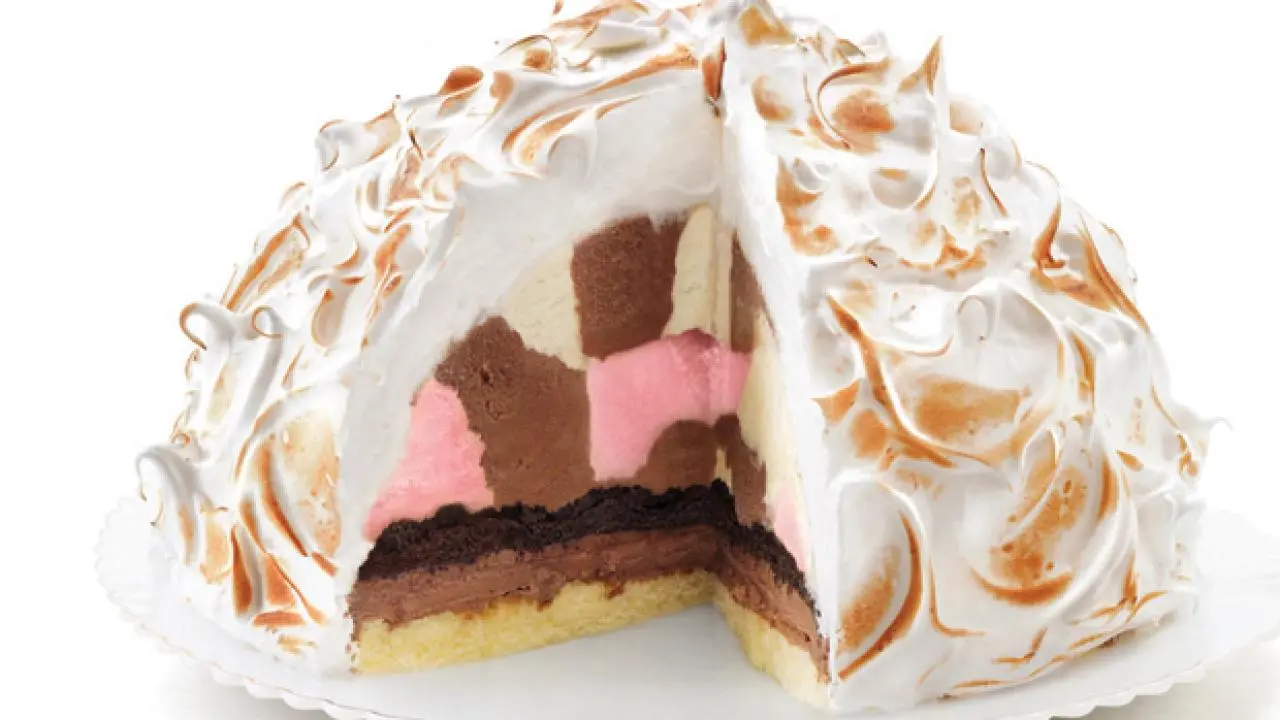
This dramatic-looking dessert is surprisingly simple to make, thanks to step-by-step tips from Food Network Kitchen.

- Nutritional Analysis
- Per Serving
- Serving Size
- 1 of 12 servings
- Calories
- 433
- Total Fat
- 15 g
- Saturated Fat
- 7 g
- Carbohydrates
- 70 g
- Dietary Fiber
- 2 g
- Sugar
- 58 g
- Protein
- 7 g
- Cholesterol
- 46 mg
- Sodium
- 256 mg
Article by Emily Saladino
This Baked Alaska recipe is a showstopping dessert and surprisingly easy to make at home. Food Network Kitchen breaks down the process into simple steps that you can tackle in short bursts or over the course of several days, so all that’s left to do is assemble the various components and serve it with a smile.
What Is Baked Alaska?
Baked Alaska is a dessert that consists of a cake base topped with ice cream and meringue, then baked or blowtorched so the swoops and swirls of meringue are lightly toasted.
As legend has it, the first baked Alaska recipe was created by Chef Charles Ranhofer of New York City’s Delmonico’s restaurant to commemorate the 1867 Alaska purchase, or transfer of what was then known as the Alaskan territory from Russia to the United States. Chef Ranhofer reportedly called it “Alaska, Florida” to demonstrate the expanse of the American footprint, and the varying temperatures of the dessert’s ingredients were said to represent the diversity of American climates. Baked Alaska dessert recipes still go by an array of nicknames, including bombe Alaska dessert, fire and ice, dessert bombe Alaska and Alaska flambé.
What’s In Baked Alaska?
Baked Alaska recipes consist of three components: a cake, ice cream or sorbet and meringue. You can use any ice cream flavors you like. Common combinations include cherry and chocolate; pistachio, vanilla and cherry; and vanilla, chocolate and strawberry. Similarly, the base is typically pound cake but can also be a yellow or chocolate cake.
How to Make a Baked Alaska Recipe Like a Pro
Colorful ice cream will make your baked Alaska recipe pop. You can use any type of ice cream in this dessert, but our recipe developers recommend picking a few brightly hued flavors, so each slice of your baked Alaska has a vibrant mosaic of colors.
Line the bowl with plastic wrap. It makes it easy to remove the molded ice cream and pound cake later.
Even out the ice cream. Press plastic wrap right against the ice cream scoops with your hands to flatten it, then add the crushed chocolate wafers to create an even surface to affix to the pound cake so your finished baked Alaska dessert recipe stands up straight.
Don’t rush it. Make sure the ice cream and crushed chocolate wafers are completely frozen in the bowl (this typically takes at least 30 minutes) before you add the pound cake. Then, give the pound-cake-topped bowl ample time to freeze through—at least two hours and up to two days—before you top it with meringue. Finally, freeze the meringue-topped ice cream cake for at least 3 more hours before toasting. These steps are crucial for the baked Alaska recipe to keep its shape.
Egg temperature is the secret to mile-high meringue. Our recipe developers use room-temperature egg whites to make meringue because they bind together, trap air and fluff up better than eggs straight from the fridge. Be sure to remove all traces of yolks and check that your cream of tartar is fresh, too.
How to add meringue. If your frozen cake and ice cream mold doesn’t immediately slide out of the bowl, let the inverted bowl sit on a parchment paper-lined baking sheet for another minute, then gently lift off the bowl and remove the plastic wrap. Food Network Kitchen’s team uses the back of a soup spoon to swoosh on the meringue. Pile it highest on the top of the cake, so the presentation is extra dramatic.
Toast the top gently. If you use a blowtorch, brown the top of the cake, then the sides, stopping as soon as the edges of the swirls look golden brown. To finish your baked Alaska recipe in the oven, adjust the racks to leave enough headspace that the meringue won’t brush against the sides or top of the oven and remove it after four minutes.
How to Serve and Store this Baked Alaska Recipe
After you bake or blowtorch the meringue, let the baked Alaska recipe sit for 5 to 10 minutes, then slice it into individual servings. Tightly wrap leftovers in plastic wrap and store in the freezer for up to seven days.
Baked Alaska
- Level: Intermediate
- Total: 6 hr 29 min
- Prep: 45 min
- Inactive: 5 hr 40 min
- Cook: 4 min
- Yield: 12 servings
-
- Nutritional Analysis
- Per Serving
- Serving Size
- 1 of 12 servings
- Calories
- 433
- Total Fat
- 15 g
- Saturated Fat
- 7 g
- Carbohydrates
- 70 g
- Dietary Fiber
- 2 g
- Sugar
- 58 g
- Protein
- 7 g
- Cholesterol
- 46 mg
- Sodium
- 256 mg
- Level: Intermediate
- Total: 6 hr 29 min
- Prep: 45 min
- Inactive: 5 hr 40 min
- Cook: 4 min
- Yield: 12 servings
-
- Nutritional Analysis
- Per Serving
- Serving Size
- 1 of 12 servings
- Calories
- 433
- Total Fat
- 15 g
- Saturated Fat
- 7 g
- Carbohydrates
- 70 g
- Dietary Fiber
- 2 g
- Sugar
- 58 g
- Protein
- 7 g
- Cholesterol
- 46 mg
- Sodium
- 256 mg
Ingredients
For the Ice Cream Cake:
For the Meringue:
Directions

- Make the ice cream cake: Brush a 3-quart metal bowl with vegetable oil; line with plastic wrap. Fill the bowl with scoops of the sorbet, vanilla ice cream and half of the chocolate ice cream, alternating small and large scoops to create a mosaic of colors and shapes. Place a piece of plastic wrap on top of the ice cream; press down to close the gaps between scoops and even out the surface. Remove the plastic wrap, sprinkle the ice cream with the wafer crumbs and re-cover with the plastic wrap, pressing gently. Freeze until set, about 30 minutes.
- Remove the wrap and spread the remaining chocolate ice cream in an even layer on top of the crumbs. Cut the pound cake into 1/2-inch-thick slices; completely cover the ice cream with the slices, trimming as needed (you'll use about two-thirds of the cake). Cover with fresh plastic wrap and freeze until firm, at least 2 hours or up to 2 days.
- Make the meringue: Whip the egg whites and cream of tartar in a large bowl with a mixer on medium-high speed until foamy, about 2 minutes. Gradually beat in the sugar on high speed until the whites are glossy and hold stiff peaks.
- Remove the top layer of plastic wrap, then invert the cake onto a parchment-lined baking sheet. (If necessary, let the cake stand overturned until it slips out.) Remove the rest of the plastic wrap and cover the ice cream completely with the meringue, making the dome-shaped top slightly thicker than the sides. Form swirly peaks in the meringue using the back of a spoon. Freeze for at least 3 more hours.
- Preheat the oven to 500 degrees. Bake the cake until the meringue peaks are golden, about 4 minutes, or brown the meringue with a blowtorch. Let the cake soften at room temperature for 5 to 10 minutes before slicing. Freeze any leftovers.


