

.jpg.rend.hgtvcom.126.196.suffix/1789013089131.jpeg)











6 Best Garbage Disposals of 2026, According to Experts
While it’s perhaps the least glamorous, a garbage disposal just might be the most useful kitchen appliance.

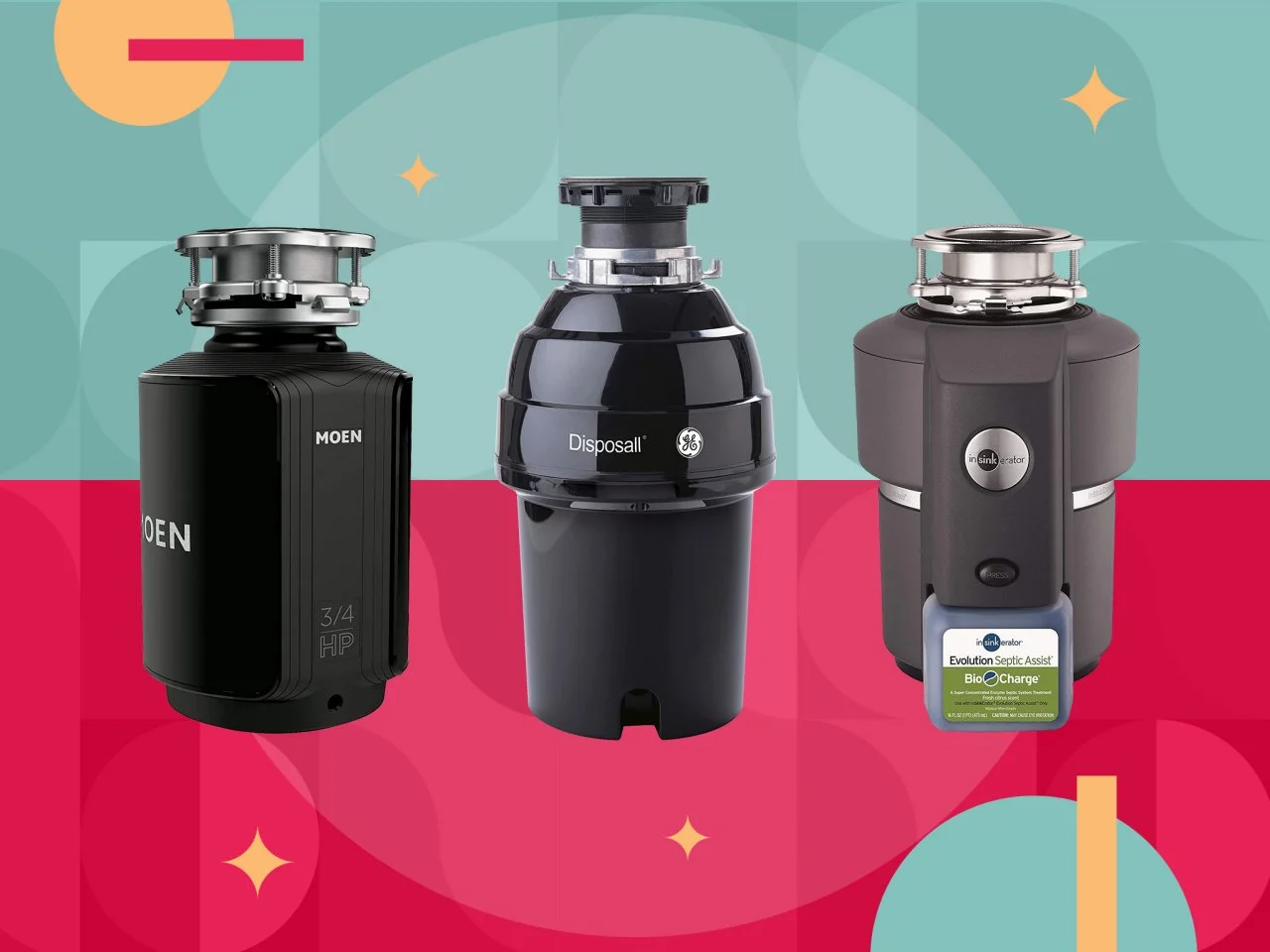
Our Top Garbage Disposal Picks
- Best Overall: GE 1 HP Continuous Feed Garbage Disposal
- Best Value Garbage Disposal: Moen GX Series Host Series 3/4 Horsepower Garbage Disposal
- Best Batch-Feed Garbage Disposal: InSinkErator Evolution Cover Control
- Best Small Garbage Disposal: InSinkErator Badger 1 Garbage Disposal 1/3 HP
- Most Powerful Garbage Disposal: Frigidaire 1.25HP Corded Disposer
- Quietest Garbage Disposal: InSinkErator Evolution Advanced Series Garbage Disposal
Garbage disposals are a super convenient way to dispose of kitchen waste. They make it easy to get rid of peels, rinds and scrapings from plates and reduce the amount of smelly garbage in your kitchen and sidewalk trashcans. They’re also better for the environment. A garbage disposal decreases the amount of solid waste that winds up in landfills, producing methane that can damage the environment. In many places, food waste from a disposal travels through pipes to a wastewater plant where it’s processed in a way that turns the gas generated into biofuel and the solid waste into fertilizers. Check with your municipality to learn more about your wastewater infrastructure.
If you’re investing in a garbage disposal for the first time or looking to upgrade your current model, these are the best garbage disposals on the market.
How We Picked
Our writer has years of experience using food disposals in test kitchens. We did extensive research into how disposals work, the differences between them and which ones are recommended by plumbers and professional reviewers. As we always do, we looked to see what people at home have to say about their experiences with their food disposals. Our goal was to recommend a selection of models for different homes and a variety of cooks.

- Powerful
- Jam resistant
- Quiet
- Cord isn’t included
With a 1 horsepower rating, the GE has the oomph to handle any cook’s collection of peels, rinds, cobs and pits, not to mention bones, according to the manufacturer’s manual. GE does suggest that large bones (and corn husks) be tossed in the trash as it can take considerable time to shred them. The grinding components are designed to be resistant to jamming and are made of stainless steel for durability. To reduce the din in your kitchen, the grinding chamber is well insulated. The GE doesn’t come with a cord, but an optional one is available if you want to do the installation yourself.
- Model Number GE GFC1020
- Type Continuous feed
- Horsepower 1
- RPMs 2,800
- Grind Chamber Capacity 32 oz.
- Warranty Limited 1 year

- Budget-friendly price
- Jam resistant
- Quiet
- Only moderately powerful
You can’t beat the price of the Moen if you’re looking for a disposal with enough power (3/4 hp) to deal with corn cobs, peach pits and chicken bones that won’t chew up your budget. Even at this low price, you get anti-jamming technology and sound insulation. The Moen comes with a cord and is lightweight, which makes it easy to install if you have an outlet under the sink.
- Model Number GXS75C
- Type Continuous feed
- Horsepower 0.75
- RPMs 2,700
- Grind Chamber Capacity 30.8 oz.
- Warranty Limited 10 year

- Stop and start operation
- Easy to position stopper
- Very quiet
- Expensive
- Cord isn't included
If you like the control a stop-and-start batch-feed model offers, this 3/4 hp model is our top choice. The magnetized stopper is particularly easy to put in place to begin operation; many batch-feed models have stoppers that you have to fiddle with every time you start the grinding process. Like all batch-feed models, it’s pricey, but this InSinkErator features excellent sound insulation. A cord isn’t included so you’ll have to purchase one if you want to install it yourself.
- Model Number EVO CVR CNTRL
- Type Batch feed
- Horsepower 0.75
- RPMs 1,725
- Grind Chamber Capacity 28.5 oz.
- Warranty Limited 9 year

- Compact
- Easy to install
- Not powerful enough for bones
If you have limited space under your sink, this continuous feed model from InSinkErator, which is only 11-1/2 inches in height, should be able to fit. It only has 1/3 hp, so it’s not designed to grind bones, pineapple crowns or watermelon rinds but can easily shred apple peels, onion skins and leftovers. You can buy it with or without a power cord and InSinkErator promises that it’s easy for a do-it-yourselfer to install.
- Model Number 79880-ISE
- Type Continuous feed
- Horsepower 0.333
- RPMs 1,725
- Grind Chamber Capacity 32 oz.
- Warranty Limited 1 year

- Very powerful
- Magnetic ring catches jewlery or tableware
- Antimicrobial finish
- Nothing
Home cooks who cook a lot and at a large scale will want this 1.25 hp disposal that can shred just about anything that you throw at it. Thanks to a magnetic ring, it captures teaspoons or bracelets before they enter the grinding chamber. On the inside of the chamber, there’s antimicrobial protection to keep the drain smelling fresh. A power cord is included so you can install it yourself. Considering its power and unique features, the Frigidaire is remarkably well-priced. Plus, it comes with an unusually long 12-year warranty.
- Model Number FF13DISPC1
- Type Continuous feed
- Horsepower 1.25
- RPMs 2800
- Grind Chamber Capacity 36.2 oz.
- Warranty Limited 12 year

- Powerful
- Jam resistant
- Very quiet
- Expensive
If there’s always a crowd gathered in your kitchen, even when it’s time to clean up, opt for this super quiet continuous-feed disposal, which won’t interfere with the lively conversation. With 1 hp and a large grinding chamber, it’s designed for households that love to cook, eat at home and entertain. It has a jam sensor, as well as an auto-reverse grind system to prevent clogs. At some retailers, you can purchase it with or without a cord.
- Model Number 80022-ISE
- Type Continuous feed
- Horsepower 1
- RPMs 1,725
- Grind Chamber Capacity 40 oz.
- Warranty Limited 10 year
How Does a Garbage Disposal Work?
A garbage disposal, sometimes referred to as a disposer, is an electric appliance that’s installed under the kitchen sink. It has a grinding chamber to collect food tossed down the drain. When a garbage disposal is turned on, centrifugal force pushes the food waste against a grinding ring that shreds it into minuscule pieces. Running water from the sink flushes the waste into the drainpipe and from there, it flows into a wastewater treatment plant or septic system.

-Oxford-/Getty
What to Consider Before Buying a Garbage Disposal
How much room do you have under the sink? Garbage disposals don’t come in standard sizes. Before you shop, measure the height, width and depth of the area under your sink. Make sure that any model you’re considering will fit in the space.
Consider continuous-feed vs. batch-feed models. Continuous-feed disposers are the most popular and come in the largest selection of sizes. To operate this type, you need to install a switch. Once you turn the disposer on, you can continuously toss food in while it’s operating. The downside is that it’s easy to lose a teaspoon or a loose-fitting engagement ring.
With a batch-feed model, after you drop your food into the disposer, you position a stopper over the drain to turn the appliance on. This makes it less convenient as if you have a lot of waste, you have to stop and start repeatedly. However, you’re less likely to lose a wayward utensil or piece of jewelry, and if one does fall in there, you can retrieve it before it’s shredded.
Decide if you want corded or cordless. Uncorded models need to be hardwired into an electric circuit and require professional installation. Garbage disposals with a cord can be plugged into an outlet in the wall under your sink, which means if you’re handy, you can install the disposal yourself.
Determine how much power you need. The horsepower (hp) of garbage disposals ranges from 1/3 to 1. The higher the number, the more efficient and quieter the garbage disposal. However, the more powerful disposals are also pricier. If you don’t do much cooking, you can get by with a unit with 1/3 to 1/2 hp. On the other hand, if you cook often and do a lot of food prep, you’ll want a unit with at least 3/4 hp. If you feed a large family every day, entertain often, and need to grind tougher waste, like melon rinds, avocado pits, and small bones (which some more powerful models can handle), your best bet is a 1-hp or higher model.

Liudmila Chernetska/Getty
Garbage Disposal FAQs
What can I put in the garbage disposal?
There are a lot of conflicting answers to this question, but almost all sources agree you can throw in leftovers and meat scraps. According to disposal manufacturers, you can process almost all parts of fruits and vegetables, including pits, pineapple tops, potato skins and banana peels, as well as coffee grinds and eggshells.
What can’t I put in the garbage disposal?
There’s a universal agreement that oil and grease and nonfood items shouldn’t be put into the disposal. In addition, clam and oyster shells are no-nos. Many plumbers recommend not processing pits, eggshells and coffee grinds, as well as stringy vegetables like celery and rhubarb or large quantities of potato peels or any vegetable skins.
So, with contradictory advice, what do you recommend?
It’s always a good idea to read and follow the advice in the manufacturer’s use and care guide and on its website. To help the disposal work well, turn the cold water on before you start it and leave the water running the entire time; let the water continue to flow for a few seconds after you turn off the disposal. Feed food gradually, giving one batch a chance to be shredded before adding more.
How do I clean a garbage disposal?
If your disposal has a black plastic part called a baffle that sits in the drain, remove it and wash it well with soap and hot water. Toss about a half dozen ice cubes, a few lemon or orange wedges, a tablespoon of baking soda, and a splash of bleach into the disposal. Without running the water, turn the disposal on; when you hear the grinding noise end, turn on the cold water and let it run to rinse out the disposal.
Can a disposal be used with a septic system?
While a disposal can be used with a septic system, it will add additional waste to your septic tank. Before installing a disposal, it’s a good idea to check with a local septic system inspector to see if your tank is large enough to handle the increased waste load. You may also need to have the septic tank pumped more often than usual.