

.jpg.rend.hgtvcom.126.196.suffix/1789013089131.jpeg)













The Right Way To Season a Cast-Iron Skillet (and Keep It That Way)
And what does it mean to season cast iron, anyway?


Seasoning a cast-iron skillet means coating it with a thin layer of oil and baking it until the oil bonds to the metal, creating a natural nonstick surface. If you care for your cast-iron pan, seasoning it correctly, it will return the favor with a lifetime of delicious meals. These heavy, forged skillets are the workhorses of the kitchen. They're durable, affordable and perfect for a variety of cooking techniques. You can sear, fry, bake, roast, braise and more in these versatile pans! Don't own a cast-iron skillet but looking to invest in one? Check out our story on the best cast iron skillets, tested and reviewed.

Renee Comet
What Does Seasoning Mean?
Seasoning refers to the hard, practically nonstick surface coating your cast iron pan. Most cast iron skillets these days come pre-seasoned, meaning they’re ready for cooking as soon as you take them out of the box. However, over time, the seasoning erodes, and you’ll need to re-apply it by brushing the skillet with a thin layer of neutral oil and heating it until the oil bonds to the metal. You’ll know the seasoning has eroded when the surface looks dry and patchy in spots, but it’s a good practice to season your skillet every so often before the seasoning starts to break down.

Renee Comet
How To Season a Cast-Iron Skillet
Seasoning a cast-iron skillet takes about 1 hour in a 450°F oven, plus cooling time — and the process should be repeated several times on a bare or stripped pan.
- Rub the Pan with a Thin Film of Neutral Oil: First, using a paper towel, coat the pan with a neutral oil like canola or vegetable oil (including the bottom and handle of the pan). Wipe away all excess oil so no pooling oil is visible — the oil should just coat the metal. The pan should feel practically dry to the touch. Using too much will cause your pan to become sticky.
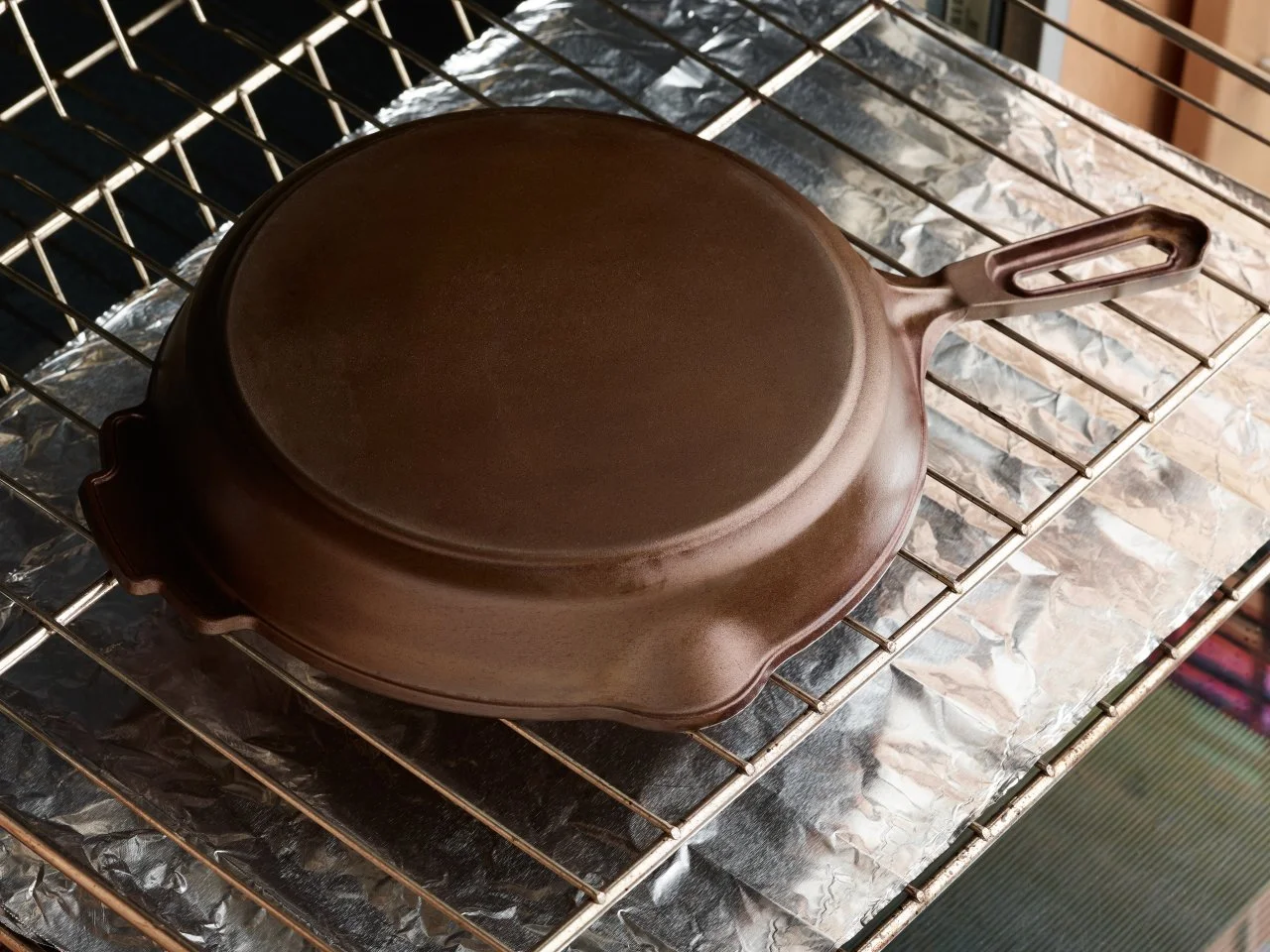
- Bake the Pan for 1 Hour: Bake upside down in the oven at 450°F for 1 hour (line the rack below with foil to catch any oil drips). This will protect the surface and give it an almost nonstick quality. Some people tout another seasoning method: heating the pan on the stove. However, we think this method creates hot and cool spots, making for uneven seasoning. Use the oven for more even results.
- Cool the Pan in the Oven: Turn off the oven and let the pan cool in the oven before touching.
- Repeat These Steps for an Unseasoned or Stripped Pan: If you're starting the seasoning from scratch, you'll want to repeat these steps multiple times until a smooth finish develops. Resist the urge to simply slather on a lot of oil, which will become sticky. Good seasoning is made from many thin layers.

Renee Comet
What To Cook in a Cast-Iron Skillet To Preserve the Seasoning
Cast-iron skillets retain and distribute heat very well, so they're perfect for searing and frying.
Cast-Iron Skillets Can Be Used on Any Type of Heat Source
Cast-iron can be used on virtually every type of heat source such as induction, electric, gas and grills. Always give your pan a few minutes to preheat before adding any food. You can use any utensils — even metal — on cast iron. There is no chemical coating to damage. And it can go from the stovetop right into the oven — and then to the table!
Avoid Acidic Foods
Acidic foods like tomatoes, citrus and vinegar can strip the seasoning from your pan and make foods taste metallic. Wait until the pan is highly seasoned to cook acidic foods in it — or just avoid them.
Season Your Skillet As You Cook
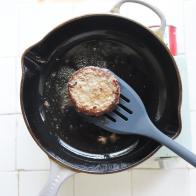
Using your pan to cook food with a lot of oil or fat — like frying chicken or cooking bacon — is really good for it. It helps build and preserve its seasoned coating naturally.

How to Clean a Cast Iron Skillet
We tested whether you can use soap.
Related Links:


.jpg.rend.hgtvcom.231.174.85.suffix/1617401426015.webp "Slicing peaches")