.jpg.rend.hgtvcom.126.196.suffix/1789013089131.jpeg)











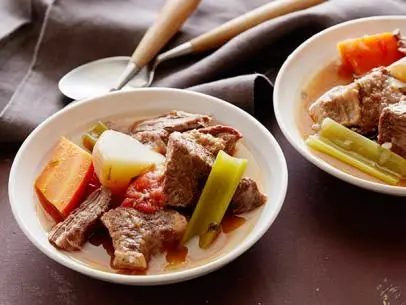
Beef Stew Recipe
One bite, and you’ll know why this tried-and-true stew recipe has hundreds of five-star reviews.


- Nutritional Analysis
- Per Serving
- Serving Size
- 1 of 6 servings
- Calories
- 608
- Total Fat
- 27 g
- Saturated Fat
- 7 g
- Carbohydrates
- 42 g
- Dietary Fiber
- 8 g
- Sugar
- 11 g
- Protein
- 54 g
- Cholesterol
- 129 mg
- Sodium
- 2208 mg
Article by Alice K. Thompson
Chunks of melt-in-your-mouth beef, tender potatoes and veggies melded with rich sauce make this recipe a classic you don’t want to miss. Our expert recipe developers have cooked and tested hundreds of stew recipes over the years, and here's one that still gets raves from both seasoned cooks and first-time stew makers alike. The recipe guides you through simple steps that build flavor and tenderize meat and vegetables for a perfect crowd-pleaser every time.
How to Make Beef Stew Like a Pro
Here’s what our test kitchen wants you to know about coaxing maximum flavor out of simple stew ingredients.
Remove big pieces of fat or tough gristle. Cut out large deposits of fat or gristly bits from your beef but keep trimming to a minimum — some fat is important for flavor.
Sear in batches. The beef will release a lot of moisture in the first few minutes of cooking; if you crowd the pan you’ll steam the meat instead of developing a flavorful browned exterior.
Pour off fat, but leave the fond. Fond is the light coating of deeply browned bits on the bottom of your pan after you sear meat or other foods. It’s packed with flavor, so scrape the bottom of the pan to incorporate it into your vegetables.
Use an ovenproof pot if you can. Dutch ovens are perfect for taking dishes from stovetop to oven for slow cooking. We like cooking the stew in a low oven since the even surrounding heat means you don’t have to stir it to prevent scorching.
Stovetop simmering is also an option. If you cook the stew on the stovetop, make sure the pan is covered and adjust the heat so the stew cooks at a low simmer. Stir it well every 20 minutes or so to ensure the bottom and sides don’t scorch.
Give the stew plenty of time. It takes time to break down the tough fibers in tasty stew meats, so don’t rush simmering.
Vinegar replaces wine. Finishing with a touch of red wine vinegar is a tried-and-true way to brighten flavors in long-cooked dishes. But if you like cooking with wine you can get a similar effect by adding a moderate amount (about 1 cup) of dry red wine to the stew just before you add the water and simmering it until almost dry. Taste the stew before serving and skip the vinegar if you like.
Make a day or two ahead. Stews really do taste better after a day in the fridge. It’s not always possible to plan ahead, but you can always look forward to leftovers! See below for storage and freezing information.
What’s the Best Beef for Stew?
Our test kitchen recommends beef chuck for stews like this one. Chuck comes from the front shoulder and neck of the animal and is composed of muscles that do a lot of work, hence a lot of connective tissue, and a marbling of interior fat. The result is meat that turns meltingly tender with long cooking. As a bonus, it’s typically well priced and readily available. Other options include boneless beef short ribs, brisket and what’s sold cubed as stew meat.
What Makes a Stew Irish?
Irish stew is usually (but not always) made with lamb or mutton, not beef. You can replace the beef with lamb stew meat or boneless leg of lamb. Just adjust the cooking time as needed until the lamb is tender.
How to Store and Freeze Beef Stew
Allow the stew to cool completely and transfer it to one or more airtight containers. You can refrigerate it for up to 3 days (it gets tastier over time!) or freeze it for up to 3 months. If the stew is frozen, thaw it in the refrigerator or in the microwave until it’s just bubbling.
Beef Stew
- Level: Intermediate
- Total: 3 hr 15 min
- Prep: 15 min
- Cook: 3 hr
- Yield: about 4 to 6 main course servings
-
- Nutritional Analysis
- Per Serving
- Serving Size
- 1 of 6 servings
- Calories
- 608
- Total Fat
- 27 g
- Saturated Fat
- 7 g
- Carbohydrates
- 42 g
- Dietary Fiber
- 8 g
- Sugar
- 11 g
- Protein
- 54 g
- Cholesterol
- 129 mg
- Sodium
- 2208 mg
- Level: Intermediate
- Total: 3 hr 15 min
- Prep: 15 min
- Cook: 3 hr
- Yield: about 4 to 6 main course servings
-
- Nutritional Analysis
- Per Serving
- Serving Size
- 1 of 6 servings
- Calories
- 608
- Total Fat
- 27 g
- Saturated Fat
- 7 g
- Carbohydrates
- 42 g
- Dietary Fiber
- 8 g
- Sugar
- 11 g
- Protein
- 54 g
- Cholesterol
- 129 mg
- Sodium
- 2208 mg
Ingredients
Directions

- Heat a large Dutch oven with a tight-fitting lid over medium-high heat. Pour in enough oil to fill the pan about 1/4-inch deep. Season the beef generously with salt and pepper, and add to the pan. Saute half the meat, uncovered, stirring only occasionally, until well-browned, about 8 minutes. Using a slotted spoon, transfer the beef to a plate. Repeat with the remaining beef. Discard the oil and wipe out the pan.
- Preheat the oven to 325 degrees F. Return the pot to the stove and melt the butter over medium high heat. Add the onion and cook, stirring, until lightly browned, about 5 minutes. Add the garlic and cook, stirring, until fragrant, about 1 minute. Add the tomato paste and cook, stirring, until lightly browned, about 1 minute more. Add the reserved beef and scatter the flour over the vegetable and beef mixture (enough to lightly coat) and cook stirring until lightly toasted. Add the water or broth, and bring to a simmer. Tie the parsley, thyme, and bay leaves together with a piece of kitchen twine and add the bundle to the pot. Season with 2 teaspoons salt, or to taste. Cover and transfer to the oven. Cook the meat until just tender, about 1 1/2 hours. (This can also be done on the stove at a low simmer.)
- Remove pot from the oven. Skim the fat from the cooking liquid with a spoon or ladle. Add the potatoes, carrots, celery, and the tomatoes, and bring to a simmer on top of the stove. Cook, uncovered, stirring occasionally, until the liquid thickens and the vegetables are tender, about 1 hour. Remove and discard the herb bundle. Stir in the vinegar and season with salt and pepper, to taste. Divide among bowls and serve immediately.
- Copyright 2003 Television Food Network, G.P. All rights reserved
Cook’s Note
Beef chuck, from the shoulder, because of its marbling of intra-muscular fat, is the choice for any type of stew. If you can't find chuck cubed for stew in your meat department, buy a thick chuck steak and cut it into 2-inch cubes.