

.jpg.rend.hgtvcom.126.196.suffix/1789013089131.jpeg)













The Best Way To Cover Your Turkey While It Cooks
A lid, foil or cheesecloth? That is the question.


bhofack2/Getty Images
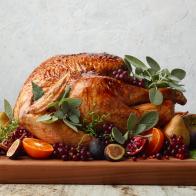
Here’s the thing about turkey: Everyone has an opinion on the best way to pull off a showstopper. Some people are devoted to deep-fried birds, while others prefer to grill theirs. If you’re going the traditional route, you'll roast your turkey in the oven. Whichever method you prefer, we have the perfect turkey recipe for you.
One question many cooks ask about how to cook turkey in the oven is whether they need to cover it — and if so, for how long? Here's our guide to cooking a beautiful bird, every time.
Should You Cover a Turkey When Cooking?
To achieve a perfectly golden, juicy turkey, let the bird spend time both covered and uncovered in the oven. We recommend covering your bird for most of the cooking time to prevent it from drying out; then, during the last 30 minutes or so of cooking, remove the cover so the skin crisps in the hot oven.

Armando Rafael
The Best Ways To Cover a Turkey When Cooking
There are a few different schools of thought about the best way to cover a turkey. Some people like to cook turkey in a big roaster with a lid, while others advocate a roasting pan and tinfoil or cheesecloth (our famous Butter-Blanketed Turkey uses the cheesecloth method). Because there’s more than one way to cover a turkey to ensure even cooking, no method is wrong. Each can yield gorgeous, crispy-skinned succulent results. We’re here to add a little clarity to the conversation by walking you through the pros and cons of each.
Cooking Turkey In a Covered Roaster
Although turkey roasters are not as common as they once were, many supermarkets still carry them. Typically oval-shaped, lightweight and enameled, the inexpensive vessels come with tight-fitting lids. If you’re in the market for one, make sure to check the roaster’s capacity; the label will usually say the largest size of turkey it can accommodate. Make sure your turkey will fit without touching the lid.
The beauty of covered roasters is that they roast and braise your turkey at the same time, making for mind-blowingly moist results. Recipes that instruct you to cook your turkey covered will often tell you to add a cup of liquid (water or broth) halfway through roasting. That liquid will gently steam your bird. Just make sure you uncover the lid about 30 minutes before the turkey’s done roasting so the skin has a chance to get crispy.
How To Cover Your Turkey With Foil
Many recipes today will instruct you to cook your bird in a roasting rack tented with foil. Because roasting racks are shallower than roasters, more hot air can circulate around the turkey. That helps make the skin extra crispy. Covering the bird with foil mimics what a roaster lid would do: it traps steam and moistness so the turkey doesn’t dry out, all the while allowing the skin to crisp up. Some recipes instruct you to cover only the turkey breast rather than the whole bird because the former cooks more quickly than the dark meat and is prone to drying out. In either case, remove the foil tent during the last 30 minutes of roasting time to encourage the crispiest skin possible.
We’ve found that covering a turkey in foil yields much moister results than roasting it without foil, and we favor simply covering up the breast to even out cooking time. Some people swear that roasting a turkey breast-side down and flipping it halfway through achieves the same results as a foil covered breast. However, it’s pretty darn hard to flip a heavy, piping-hot bird. And, the roasting rack can leave marks or indentations on the breast that detract from a stunning presentation.
How To Cover Your Turkey With Cheesecloth
You can cover your bird in several layers of cheesecloth soaked in butter, herbs and even a little bit of wine (again, removing it during the last 30 minutes). Cheesecloth turkeys are delightfully moist with crispy skin, although cheesecloth can be expensive and hard to find, as well as messy to apply once it's wet with melted butter — and there’s a risk it’ll start smoking in the oven.
At the end of the day, roasting your turkey in a covered roaster will most likely yield the moistest meat out of the three techniques above, while roasting it in a roasting pan covered in foil or cheesecloth will probably make for crispier skin. Whichever way you choose to cover your turkey, we guarantee that everyone will be clamoring for thirds.
Related Stories:
The Food Network Kitchen team develops recipes, tests products, preps for Food Network shows, produces videos and social content, hosts events and much more. "Food Network Kitchen" is the marker of this team's inspiring, helpful and trustworthy content on FoodNetwork.com.


