











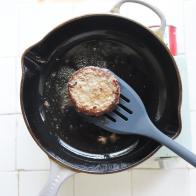
Pan Seared T-Bone Steak
Bring the steakhouse home with our recipe for Pan Seared T-Bone Steak. You’ll be surprised how easy it is to make a tender, juicy steak right in your own kitchen with just a few basic ingredients. Read on for our tips and tricks for the perfect pan seared T-bone steak.


- Nutritional Analysis
- Per Serving
- Serving Size
- 1 of 2 servings
- Calories
- 806
- Total Fat
- 57 g
- Saturated Fat
- 22 g
- Carbohydrates
- 1 g
- Dietary Fiber
- 0 g
- Sugar
- 0 g
- Protein
- 70 g
- Cholesterol
- 208 mg
- Sodium
- 810 mg
Article by: Krissy Downey
Cooking steak at home is all about having some technical skills under your belt. From choosing your steak at the store to seasoning it and slicing it properly, each step, when done just right, adds up to irresistible, restaurant-quality results at home. With some knowledge and a bit of practice, you’ll want to make our perfectly seared T-bone steak for all of your special dinners and occasions.
What Is a T-Bone Steak?
A T-bone steak comes from the short loin of the cow and is named for its T-like shape. The T-shaped bone separates two types of meat: the strip steak on one side and the smaller tenderloin on the other. With two different cuts of meat in one steak, the T-bone has something for everyone: soft and mild filet mignon and robust, marbled strip steak.
How to Pan Sear a T-Bone Steak Like a Pro
Bring the steak to room temperature. Letting your steak come to room temperature for about an hour takes the chill off and ensures even cooking all the way through. It is especially essential when cooking a thicker cut, like a T-bone.
Pat the steak very dry. You want your steak to develop a nice, brown crust when it sears, and moisture disrupts that process. The more moisture, the less your steak will brown. So, use paper towels to pat the steak very dry before the cooking process begins.
Season generously. Steak, especially thick-cut steak, needs lots of salt to penetrate the surface and reach the center. Don’t be shy here; season more aggressively than you would chicken or fish. Trust us, the steak needs it!
Use neutral oil. You want to get the pan scorching hot before you add in the steak to ensure a proper sear. With a very hot pan, you need oil that can stand up to the heat without burning. Non-neutral oils like olive oil have a low smoke point, meaning they reach the point of burning quickly. Neutral oils like canola, avocado xand safflower have a high smoke point, so they can take the heat.
Cook in a cast-iron skillet. If you have one on hand, a cast-iron skillet is ideal for a multitude of reasons. First, it is oven safe, so you can use it for the full duration of cooking from stovetop to oven. Secondly, cast iron is known for distributing heat evenly, ensuring the perfect sear and crust on your steak. Cast iron also retains flavor the more you use the pan, meaning that each time you use it, you’re building more and more flavor for the next time. While the flavors don’t carry over strongly, cast iron will slightly enhance the taste of certain foods like steak, resulting in a richer, more complex tasting steak.
Always use a meat thermometer. The only way to really know if steak is cooked to your liking is by using a meat thermometer. 120 degrees is rare, 130 degrees is medium rare, 140 degrees is medium, 150 degrees is medium-well and 160 degrees and above is well done. The meat thermometer will completely remove the guess work, giving you perfectly cooked steak every time.
Don’t skip resting. Letting meat rest after cooking is essential because it allows the juices to redistribute throughout the meat. During cooking, the heat pushes all the juices toward the center of the steak. If you cut the steak immediately, those juices will all spill right out onto your cutting board, leaving the meat dry. Resting helps retain moisture and ensures a more tender and flavorful result.
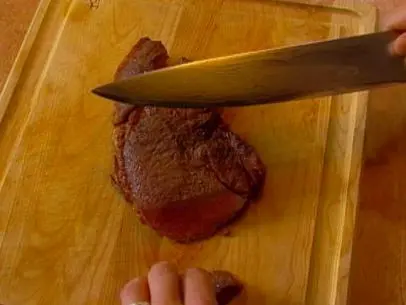
Cut against the grain. Cutting against the grain means cutting into the muscle fibers, which results in more tender meat. When you cut with or along the grain, the long muscle fibers remain intact, which can make the meat more difficult to chew. You don’t want to undo all the work you’ve just done just by cutting the steak improperly, so bring it home with the perfect slice.
Pan Seared T-Bone Steak
- Level: Easy
- Total: 1 hr
- Prep: 5 min
- Inactive: 40 min
- Cook: 15 min
- Yield: 2 servings
-
- Nutritional Analysis
- Per Serving
- Serving Size
- 1 of 2 servings
- Calories
- 806
- Total Fat
- 57 g
- Saturated Fat
- 22 g
- Carbohydrates
- 1 g
- Dietary Fiber
- 0 g
- Sugar
- 0 g
- Protein
- 70 g
- Cholesterol
- 208 mg
- Sodium
- 810 mg
- Level: Easy
- Total: 1 hr
- Prep: 5 min
- Inactive: 40 min
- Cook: 15 min
- Yield: 2 servings
-
- Nutritional Analysis
- Per Serving
- Serving Size
- 1 of 2 servings
- Calories
- 806
- Total Fat
- 57 g
- Saturated Fat
- 22 g
- Carbohydrates
- 1 g
- Dietary Fiber
- 0 g
- Sugar
- 0 g
- Protein
- 70 g
- Cholesterol
- 208 mg
- Sodium
- 810 mg
Ingredients
Directions
- Preheat the oven to 450 degrees F. A half-hour before cooking, remove steak from refrigerator.
- Heat a large skillet over high heat. Pat steak dry and season generously with salt and pepper. Add oil to hot skillet and when it begins to smoke add steak. Reduce heat slightly and cook steak until browned, about 4 minutes on each side. Transfer skillet to the oven. Roast until an instant-read thermometer inserted sideways into the steak registers 120 degrees F for medium-rare, about 6 to 8 minutes. Transfer steak to a cutting board and let it rest for 10 minutes. Cut steak from the bone and carve meat across the grain.
Cook’s Note
Porterhouse and T-bone steaks are interchangeable in this recipe. Either way, look for a 1 1/2-pound steak that is 1 1/2 to 2 inches thick.
Looking for Something Else?




Related Pages
- Barbeque Spiced Grilled T-Bone Steak
- Cajun T-Bone Steak
- Big T-Bone Steak
- Sunny's Easy T-Bone Steak N Potatoes Salad
- Caesar T-Bone Steak with Stout Pan Sauce
- Sunny's T-Bone Steak with Any Herb Sauce
- Beer Marinated T-Bone Steak, Sauteed Onions and...
- Sunny's T-Bone Steak with Easy Bearnaise Sauce
- T-Bone Steak with Charred Tomato-Horseradish...