







FoodNetwork Site Search Results
Refine by:
-
Chef
- Santos Loo (8)
- Ingrid Hoffmann (7)
- Food Network Kitchen (6)
- Erik Ramirez (5)
- Mary Sue Milliken (5)
- Susan Feniger (5)
- Franco Noriega (4)
- Giada De Laurentiis (3)
- Aaron Sanchez (2)
- CVI.CHE 105 (2)
- Show
- Ingredient
- Course
- Dish
- Recipes Only
Showing 91 - 100 of 176 results for peruvian
Sopa de Leche
Video
| 38:04
This creamy, cheesy soup transports Santos Loo to his little coastal town in Peru, called Barranca. His version of sopa de leche is hearty with pasta and poached eggs, cooked right in the broth, plus a few modern flourishes, like Parmesan and olive oil.

Gimme Gator
Episode
| From:
Chopped
Strange incarnations of everyday ingredients, black garlic and coconut vinegar, challenge the chefs in the appetizer round. The judges go on the hunt for compelling flavor combinations in the chefs' alligator entrees, then a Peruvian fruit is the most unusual find in the dessert basket.

Quinoa Mushroom Bowl
Video
| 02:35
Guy Fieri heads to Florida to try a Peruvian grain bowl made with quinoa, peppers, onions, tomatoes and cremini mushrooms.

Pollo Shi Jao Kay
Video
| 00:52
Guy stops by Miami Peruvian restaurant Mr. and Mrs. Bun for a fried chicken sandwich made with Shi Jao Kay sauce -- a combination of garlic, soy sauce, oyster sauce, sesame oil and sugar.


Locro de Zapallo
Video
| 32:34
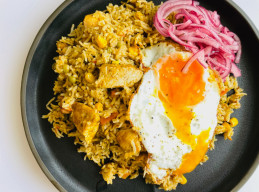
Santos Loo creates a simple, yummy, Peruvian vegetarian squash stew. Squash, potatoes and mozzarella slowly cook with butter and egg to create a creamy puree with colorful peas, corn and fresh cilantro. Serve it with steamed rice and a fried egg.

Tomato Bruschetta
Video
| 03:37
Franco Noriega puts a spin on the classic bruschetta by confiting his tomatoes in olive oil and topping them with an Italian sauce made from fresh herbs.

Erik Ramirez
PROFILES
Let there be no mistake—Chef Erik Ramirez makes a mean Pollo a la Brasa, ceviche, and Lomo Saltado. But when he puts ponzu and daikon in that ceviche, or bacon and banana in his quinoa, the message is clear: there’s more to Peruvian cuisine than meets the eye. At Ramirez’s Michelin-starred Brooklyn restaurant, Llama Inn, the spotlight is on flavor, and he’ll go great lengths to achieve it—like growing huacatay, an Andean herb, right on Llama Inn’s rooftop to make a lapping-good green sauce for roast chicken. Meanwhile, the charred octopus ceviche gets a sprinkling of togarashi.Wait. Japanese chile in ceviche? That’s not Peruvian, that’s fusion. But Ramirez will tell you that cultural combinations are fluid in Peru, where there are even specialized terms for them: “Chifa” to describe Chinese-Peruvian and “Nikkei” for Japanese-Peruvian. You can probably taste the glossy umami depth of Chinese oyster sauce in the Lomo Saltado, and Ramirez serves it with scallion pancakes so diners can build their own Lomo "tacos."Ramirez hasn’t always been this in tune with his Peruvian palate. Having been raised in New Jersey on his mother’s traditional arroz con pollo and rich stews, he wanted to widen his horizons when he started his culinary career in NYC and sought out a ticket to another country’s kitchen. He developed classic French and American skillsets at Eleven Madison Park and Irving Mill, respectively, which shine as you watch him swiftly slice an onion or emulsify sauces to silky perfection.But a trip to Peru shed new light on the food he'd grown up eating when a mind-blowing ceviche changed everything: “I was just like, wow...I couldn’t believe what I’d been missing out on for 28 years,” he recalls.Outside Llama Inn, the backdrop of the Brooklyn-Queens Expressway helps set the pace for his food: dynamic, never stagnant. “It’s New York cooking with a Peruvian attitude and heartbeat,” he says. “I knew it was going to translate because the flavor profiles of Peruvian cuisine are delicious. Delicious is delicious no matter what continent you are on.” That’s certainly the case in the dishes Ramirez has made for Panna using ingredients that may raise eyebrows, but which make total sense in your mouth. Pollo a la Brasa, an iconic Peruvian dish, carries a funky whop of Chinese black bean paste in the marinade; carapulcra, an indigenous pork mole features papas secas, freeze-dried potatoes that almost look like pasta. Last but not least, there’s ceviche, swimming in a gingery, vegetal “Leche de Tigre” that will inspire an “Aha!” moment in your mouth.Once you source a few key, special ingredients, the prep is simple, the flavors original yet grounded. His dishes have something for everyone: If you already love Peruvian food, these recipes will shake up your favorites with New York swagger. And if you’re new to Peru? You’re in for a delicious ride.Erik's Restaurant:Llama Inn (Brooklyn, NY)