

.jpg.rend.hgtvcom.126.196.suffix/1789013089131.jpeg)












How to Cook Acorn Squash
Here, a complete guide to buying, cutting and roasting acorn squash, according to our test kitchen.


- Nutritional Analysis
- Per Serving
- Serving Size
- 1 of 4 servings
- Calories
- 252
- Total Fat
- 6 g
- Saturated Fat
- 4 g
- Carbohydrates
- 52 g
- Dietary Fiber
- 8 g
- Sugar
- 0 g
- Protein
- 4 g
- Cholesterol
- 15 mg
- Sodium
- 1484 mg
Article by Grace Elkus
Winter squash comes in all sorts of shapes and sizes, from oblong spaghetti squash to squat, pocket-sized honeynuts and burly butternuts. Among the most versatile is acorn squash, a small, round variety that can be prepared in all sorts of ways. Roasting acorn is our preferred way to cook it: the technique slowly builds nuanced flavor and almost creamy texture.
What Is Acorn Squash?
Acorn squash is a small variety of winter squash, weighing just 1 to 2 pounds, that has a mild, earthy flavor.
In most of the United States, acorn squash is at its peak during the fall and winter months. Its dark green skin is edible and the golden flesh within is earthy and mild-mannered, which is why acorn squash is often paired with sweet ingredients like maple syrup. It's easy to cook, and there are endless ways to do it, from air frying and broiling to steaming and slow cooking. Once it's tender, you can stuff it with sausage, puree it into soup or mash it with lots of butter. It can also be used interchangeably with most other winter squashes.
How to Buy and Store Acorn Squash
When you’re at a grocery store or farmers market choosing an acorn squash to cook with, opt for one that feels heavy for its size, with no visible bruises or brown spots. Its skin should feel firm, and look dull, not shiny. At home, store it in a cool, dry place for up to one month.
The Best Way to Cut Acorn Squash
Good news: you don’t need to peel acorn squash. Its hard, grooved skin softens significantly as it cooks, and it's edible, too. If you do want to remove the skin, wait until after you cook it, at which point it will peel right off.
Most recipes call for acorn squash to be halved or quartered, with the seeds removed. Here’s how to cut acorn squash:
Step 1: Position the Squash
Place the squash on a stable cutting board with the stem side facing away from you.
Step 2: Cut in Half
Use a sharp chef's knife to slice off the top of the squash, then place it cut side down. (This will prevent it from rolling around on the cutting board). Slice the squash in half, carefully removing the knife from the flesh and repositioning it as necessary.
Step 3: Remove the Seeds
Position a spoon—ideally a grapefruit spoon with teeth, but any spoon you can comfortably grip will work—at the top or stem side of the seed-filled indentation in each squash half. Scoop out the seeds and any stringy pulp that clings to them. Discard or rinse and roast the seeds as you would pumpkin seeds. Repeat on the other squash half.
Step 4: Slice (Optional)
If the recipe you’re using calls for squash slices, place each squash half cut side down on the cutting board, then slice to desired thickness.
How to Cook Acorn Squash
Method 1: Roasting
This is Food Network Kitchen’s favorite way to prepare acorn squash. A recipe follows.
Method 2: Microwave
Cooking acorn squash in the microwave is a smart way to save time, especially if it's getting stuffed and cooked again. Simply halve the squash, remove the seeds, place the halves in a large microwave-safe bowl with ¼ cup water, loosely cover the dish with plastic wrap and microwave the squash until fork-tender, 10 to 15 minutes. Season as desired.
How Long to Cook Acorn Squash
Acorn squash is done cooking when a small knife or fork slides easily through the flesh. The total cook time will depend on the size of the squash and your cooking method; thicker wedges, for instance, will take longer to cook than thinner ones.
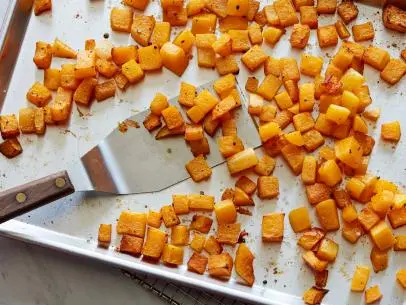
For a flavorful, photo-worthy sear on roasted squash, place a baking sheet in the oven as it preheats. When the squash hits the hot pan, that surface will begin to caramelize immediately and build color and flavor.
Roasted Acorn Squash Halves
- Level: Easy
- Total: 1 hr
- Active: 5 min
- Yield: 4
-
- Nutritional Analysis
- Per Serving
- Serving Size
- 1 of 4 servings
- Calories
- 252
- Total Fat
- 6 g
- Saturated Fat
- 4 g
- Carbohydrates
- 52 g
- Dietary Fiber
- 8 g
- Sugar
- 0 g
- Protein
- 4 g
- Cholesterol
- 15 mg
- Sodium
- 1484 mg
- Level: Easy
- Total: 1 hr
- Active: 5 min
- Yield: 4
-
- Nutritional Analysis
- Per Serving
- Serving Size
- 1 of 4 servings
- Calories
- 252
- Total Fat
- 6 g
- Saturated Fat
- 4 g
- Carbohydrates
- 52 g
- Dietary Fiber
- 8 g
- Sugar
- 0 g
- Protein
- 4 g
- Cholesterol
- 15 mg
- Sodium
- 1484 mg
Ingredients
Directions
- Preheat oven to 425 degrees F. Halve the squash and scoop out and discard the seeds and strings.
- Put the squash halves on a baking sheet. Brush with the butter and sprinkle them with the salt and a few grinds of pepper. Roast until they are brown and tender, 50 to 55 minutes.
- Transfer the squash to a serving plate and garnish with fresh thyme sprigs if using. Serve warm or at room temperature.