.jpg.rend.hgtvcom.126.196.suffix/1789013089131.jpeg)











‘Pitmasters’ Judge Jess Pryles Shares BBQ Secrets in Her New Cookbook ‘Prime Cuts’
Discover how to save money and stress less as you create blue ribbon-worthy dinners, side dishes and even desserts. Plus, Jess reveals what surprised her most about the debut season of the open-air endurance cooking series “Pitmasters.”

Jess Pryles / Prime Cuts: The Complete Guide to Choosing, Understanding, and Cooking Meat, by Jess Pryles. Copyright © 2026. Reprinted with permission from Murdoch Books, an division of Allen & Unwin.
Prime Cuts is Jess Pryles’ second cookbook, after 2018’s Hardcore Carnivore: Cook Meat Like You Mean It. Before Jess fell in love with barbecue, she owned a cupcake bakery.

If you’ve ever walked into a butcher shop or the meat department at the supermarket and felt immediately overwhelmed, you’re in good company. Although Jess Pryles is now renowned as an award-winning live-fire cook, barbecue authority, butcher and meat science expert, the Pitmasters judge admits that 18 years ago, she was a mere meat mortal like many of us.

Meet the Teams Competing in 'Pitmasters' 15 Photos
Meet the judges and competitors of this all-new high-heat and high-stakes cooking competition.
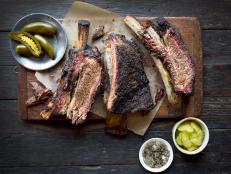
The year was 2008. “The moment that truly changed everything for me was my first taste of a smoked beef rib on a trip to Texas,” Jess recalled. “My first bite of traditional Texas barbecue was earth-shattering. The beef rib was smoky with a coarse peppery bark and a crispy membrane, yet the meat itself was tender. The flavor was incredible.”
Her curiosity was instantly sparked. How could someone take a massive and tough cut of beef and transform it into something so extraordinary — somehow delicate and delicious — using only fire, airflow and perhaps a seasoning or two? And how might one know which cut of meat offers the best bang for the buck to ensure it’s possible to barbecue as often as possible without breaking the budget?
“I didn’t just want to eat more of it, I wanted to learn how it was made,” she said.
Jess has invested the 18 years since in dedicating her personal and professional life to becoming what the Australian-born, Austin, Texas-based culinary pro is now known as: the Hardcore Carnivore. Along the way, she’s earned a graduate certificate in meat science from Iowa State University, has hosted and competed on a variety of outdoor cooking shows, co-founded the Australian BBQ Alliance, released her own line of spice rubs and seasonings, and tested and perfected more than 100 recipes for her debut 2018 cookbook, Hardcore Carnivore: Cook Meat Like You Mean It.

And now, on the heels of her role as judge on Pitmasters, Jess is preparing to dish up even more tips in her second cookbook, Prime Cuts: The Complete Guide to Choosing, Understanding and Cooking Meat.
We sat down with the humble and humorous culinary pro to score some behind-the-scenes secrets about the first season of Pitmasters and to see if we could steal a few of her top tricks of the trade to share … before you can devour every page of Prime Cuts when the cookbook hits stores October 6.

We’re so excited to watch you as a judge on Pitmasters! What surprised you most about the experience or the competitors?
I was surprised by just how much range the competitors had! Outsiders and newbies often think barbecue has one rigid set of rules, but these cooks brought completely different backgrounds, flavor references and approaches to live-fire cooking. I love that they destroyed that idea of typical “competition barbecue” and brought it back to the skill of live-fire cooking and the love of great food.
What impressed me most was their ability to adapt. It’s one thing to cook your signature dish in your own environment, with your own equipment and plenty of preparation. It’s another to be handed a challenge, work under serious time pressure and still make smart decisions about fire, seasoning and doneness.
Congratulations on the upcoming release of Prime Cuts — it’s beautiful and packed with so many takeaways. One aspect that really stood out to me was the guidance about how to use bones, fat and budget-friendly cuts. Why was this important for you to include? And would you mind dishing about one of your all-time favorite budget-friendly barbecue tips?
Meat is expensive, and premium cuts are becoming less accessible for a lot of people. An animal is made up of far more than rib eyes and tenderloins, though, and I wanted to show that eating well doesn’t have to mean buying the most expensive cut in the case. There is incredible flavor and value in bones, fat and harder-working muscles when you understand how to use them. Learning to cook those parts makes meat more affordable, reduces waste and means we’re not placing all the demand on the same handful of cuts.
One of my favorite budget barbecue tips is to smoke a chuck roast instead of a brisket. A chuck roast has plenty of beefy flavor, fat and connective tissue, but it’s smaller, usually less expensive and much less intimidating for a newer cook. You still get to practice the fundamentals of low-and-slow barbecue-building bark, managing temperature and waiting for collagen to break down — without committing to a huge, costly cut of meat.
I grew up in a family that grilled quite a bit, but smoking and true low-and-slow barbecue is fairly new to me. If readers might be in a similar situation, what is one cut of meat you might recommend as a great “on-ramp” to grow more comfortable with the process?
Try pork butt! It’s one of the most forgiving cuts for someone learning to smoke meat because it has plenty of fat and connective tissue, and it gives you a generous window between becoming tender and overcooked. Brisket gets all the glory, but it is a much more demanding and expensive lesson. Pork butt allows you to learn how your smoker behaves, how to maintain temperature, how smoke develops on the surface and how collagen transforms during a long cook. Even if the timing isn’t absolutely perfect, you’re still very likely to end up with something delicious.

Rob Palmer / Prime Cuts: The Complete Guide to Choosing, Understanding, and Cooking Meat, by Jess Pryles. Copyright © 2026. Reprinted with permission from Murdoch Books, an division of Allen & Unwin.
Jess likes to start this Hickory-Smoked Pulled Pork recipe in the morning so she and her crew can enjoy a pulled pork feast for dinner.
As a born-and-raised Iowan, your many pork chapters really spoke to me. In your opinion, what is the most versatile cut of pork — and why?
I have to give it to the pork shoulder, particularly the butt. [Both are technically from the pig’s shoulder; the butt is sourced from the upper portion and the shoulder cut is located a little lower.] It contains a collection of different muscles with varying amounts of fat, connective tissue and flavor, which gives you an enormous number of options.
You can smoke pork butt whole for pulled pork, cut it into chunks for a braise or stew (like the pozole in my book!), slice it into thick pork steaks for low-and-slow cooking or slice it thinly across the grain for quick-cooking. The same part of the animal can also become country-style ribs, collar steaks or cured coppa, depending on how it is fabricated.
That is true versatility: one cut that can work across completely different cuisines and cooking methods.
I’m totally borrowing the secret you share in your recipe for Ultra-Crispy Roast Chicken for this year’s Thanksgiving turkey. Can you tell us more about the science behind this method?
I swear by mixing a small amount of baking powder with salt and applying this to the skin. Baking powder is alkaline, so it raises the pH at the surface of the bird. That creates a more favorable environment for the Maillard reaction — the chemical reaction responsible for the deep browning and roasted flavors we love. It also helps the skin dry and blister more effectively, giving you that brittle, crispy texture instead of rubbery skin.

LR Bradley, Jess Pryles / Prime Cuts: The Complete Guide to Choosing, Understanding, and Cooking Meat, by Jess Pryles. Copyright © 2026. Reprinted with permission from Murdoch Books, an division of Allen & Unwin.
“One of the very best parts of an oven-roasted bird is the skin,” Jess writes as she introduces her Ultra-Crispy Roast Chicken technique in Prime Cuts.
The important warning is to use baking powder, not baking soda. Baking soda is much more alkaline and can leave an unpleasant flavor.
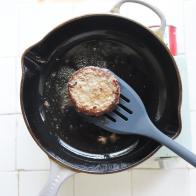
I adore your reminder that we can sear directly on the grill, in a skillet or with a blowtorch. Fun! As a general rule, are you team reverse sear or sear first, followed by lower heat to finish? Why?
This is a bit of a trick question! The answer is it depends on the cut.
Reverse searing is a fantastic method, especially for beginners or for anyone cooking a very thick steak. You can cook the center slowly, let the meat rest, then finish it very quickly over intense heat.
Personally, I’m on Team “Just Keep Flipping.” I prefer to cook a steak over direct heat and turn it frequently. Repeated flipping allows the heat to build gradually and evenly without leaving one side exposed long enough to overcook, while still developing a great crust. If I could only choose one method, it’s just-keep-flipping over live charcoal.
I know it’s like choosing a favorite child or pet, but imagine that you can only make one recipe from Prime Cuts for dinner tonight. Which would you choose, and what makes this the MVP?
I’m going to cheat slightly and make a mashup: the Herb-Mopped Picanha, served with the Jalapeño Pecan Pesto from the center-cut top sirloin recipe.

Rob Palmer / Prime Cuts: The Complete Guide to Choosing, Understanding, and Cooking Meat, by Jess Pryles. Copyright © 2026. Reprinted with permission from Murdoch Books, an division of Allen & Unwin.
To add more complexity to oil-basted steaks, Jess employs a bundle of herbs as a “brush.”
Picanha is my favorite cut of beef, and the herb mop gives it this fresh, aromatic layer that works beautifully against the richness of the meat and its fat cap. Then, the pesto brings heat, acidity, herbs and that buttery pecan texture. Together, they hit everything I want in one plate, but also feel like the perfect representation of Prime Cuts. The book gives you complete recipes, but it also gives you the knowledge and confidence to borrow components, mix them up and cook according to what sounds good to you. Tonight, that combination would absolutely be my MVP.
Once this dish is done and ready to share, there are three seats left at the table. Who is joining you?
Can I choose an imaginary character? Jack Donaghy from 30 Rock is absolutely getting a seat. He would appreciate fine beef, have extremely strong opinions about the wine pairing and somehow turn dinner into a corporate strategy session.
Anthony Bourdain would be there too. I think he would bring unpretentious conversation that makes a dinner memorable, and I’d love to hear his perspective on how food media has changed.
And the final seat goes to Henry Cavill. He used Hardcore Carnivore Black [Jess’ best-selling spice blend that includes garlic, black pepper and activated charcoal to help build a bark on the exterior of meat] when he cooked his very first brisket, so I feel like we already have some unfinished meat conversation to continue over dinner.




.jpeg.rend.hgtvcom.231.174.suffix/1784209010579.jpeg)